
Introduction
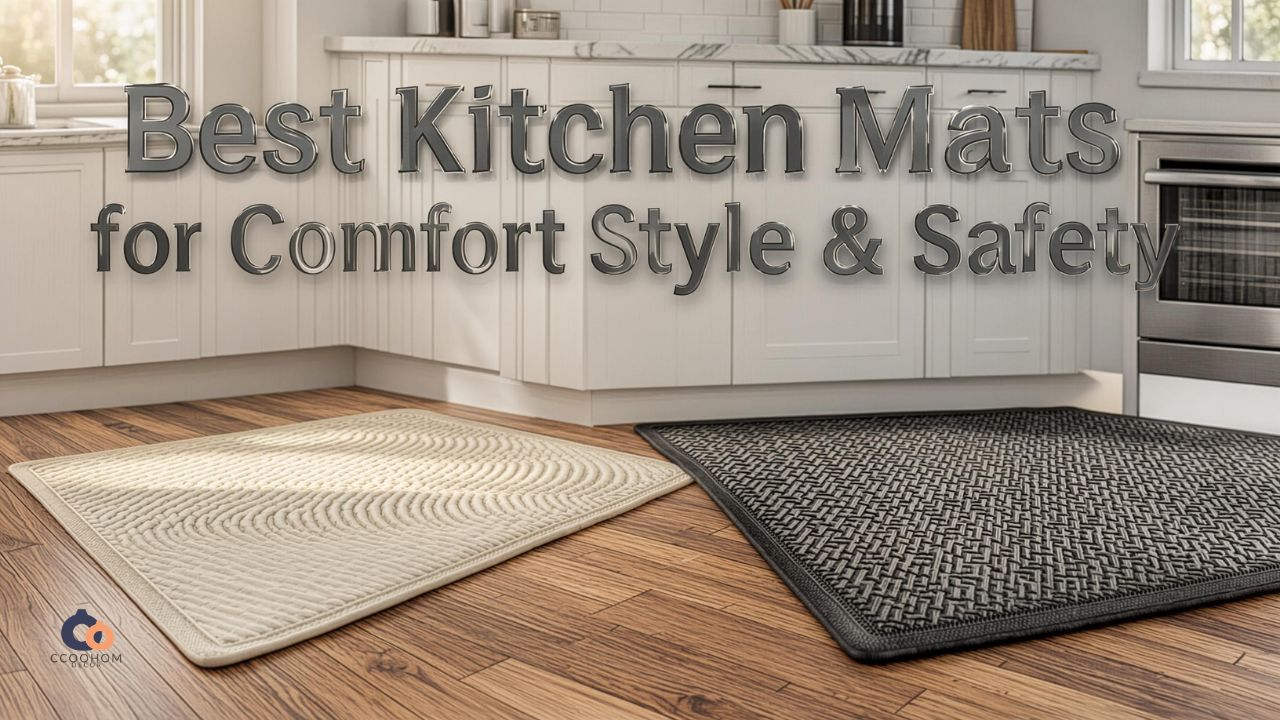
If you’ve ever finished cooking dinner and felt that dull ache in your heels or lower back, you already understand why kitchen mats matter. What seems like a simple home accessory can quietly transform your daily routine—adding comfort, protecting your floors, and even elevating the look of your space.
The kitchen is one of the most-used rooms in any home. It’s where mornings begin, conversations unfold, and memories simmer alongside dinner. Yet we often overlook how much time we spend standing there. The right floor support can reduce fatigue, prevent slips, and bring a layer of warmth to an otherwise hard surface.
Whether you cook daily or occasionally experiment with weekend recipes, investing in the right foundation beneath your feet makes a real difference. Let’s explore how to choose wisely and create a kitchen that feels as good as it looks.
Why Kitchen Mats Are More Than Just Decor
Standing on tile, hardwood, or laminate for extended periods puts pressure on your joints and spine. Over time, this can contribute to discomfort and fatigue.


4
A thoughtfully chosen floor covering serves several purposes:
- Ergonomic support: Cushioned surfaces absorb impact.
- Slip resistance: Textured backing reduces accidents.
- Floor protection: Shields wood or tile from spills and scratches.
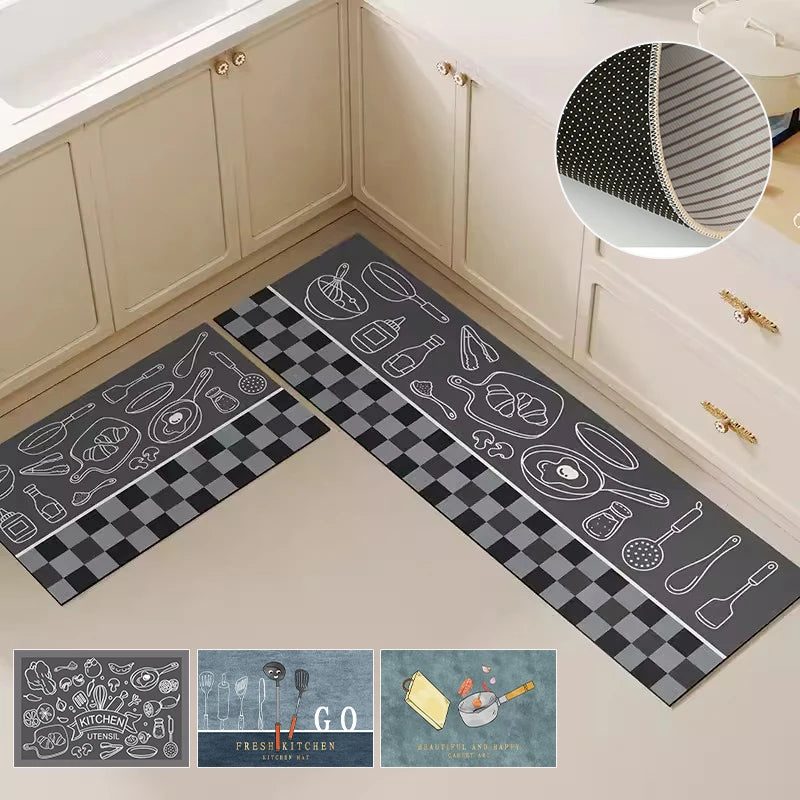
- Aesthetic enhancement: Adds color, pattern, and personality.
It’s not just about softness—it’s about designing a functional workspace that supports your body every day.
Understanding the Different Types of Kitchen Mats
Choosing the right option starts with understanding the main categories available.
Anti-Fatigue Kitchen Mats
These are designed with high-density foam or gel cores. Their purpose is to encourage subtle muscle movement while you stand, reducing strain on the legs and lower back.
They’re ideal for:
- People who cook daily
- Bakers who prep for long periods
- Homes with hard tile or stone floors
Washable Fabric Mats
Fabric-based designs offer softness and style. Many come with machine-washable features, making them convenient for busy households.
Best for:
- Families with kids
- Kitchens prone to spills
- Decorative layering
Non-Slip Rubber Mats
Made with durable rubber backing, these provide maximum grip. They’re often used near sinks or high-traffic cooking zones.
Kitchen Runners
Long, narrow designs that stretch across prep areas or galley kitchens. They create visual continuity and comfort along extended workspaces.
Each type serves a distinct purpose, so understanding your daily habits helps narrow down your ideal choice.
How Kitchen Mats Improve Comfort and Health
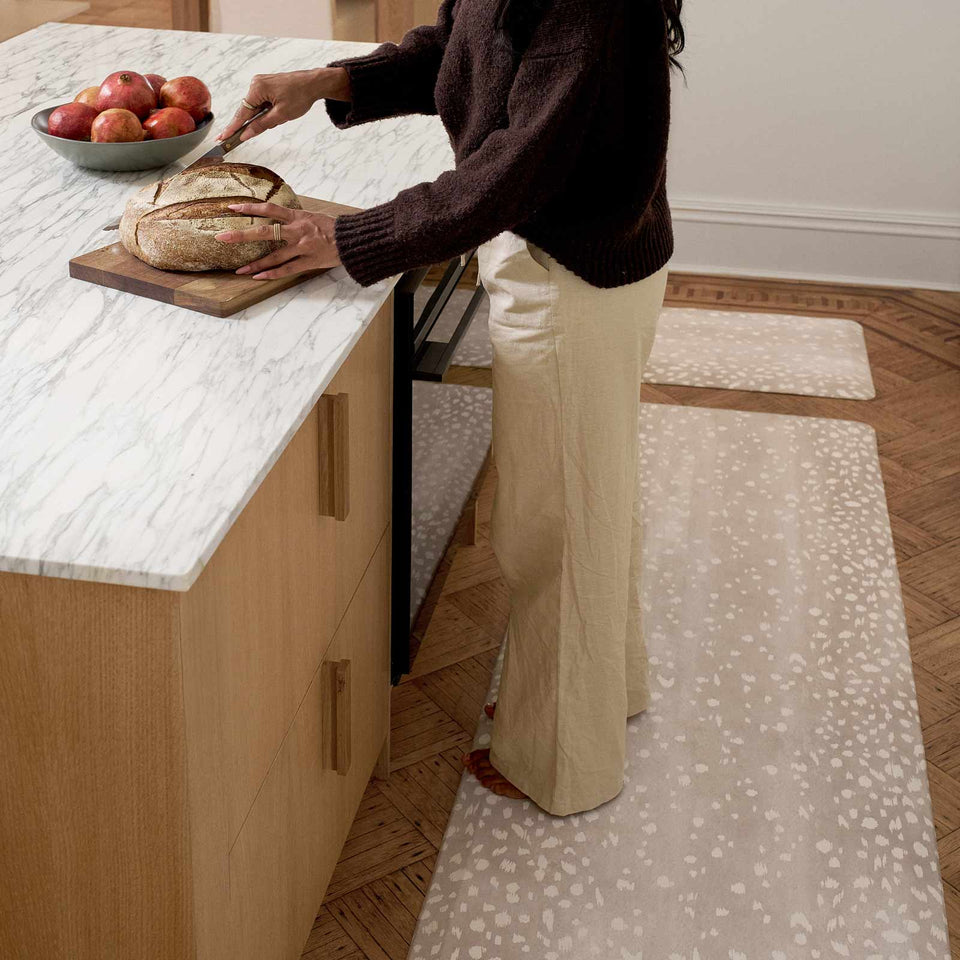
Prolonged standing can compress spinal discs and reduce circulation. A cushioned surface promotes micro-movements in leg muscles, which improves blood flow and reduces stiffness.

4
Key health benefits include:
- Reduced lower back tension
- Less pressure on knees and ankles
- Improved posture support
- Decreased foot fatigue
Many homeowners notice the difference within days of switching to supportive flooring. It’s a small upgrade with surprisingly big results.
Choosing the Right Material for Your Space
Material impacts durability, comfort, and maintenance.
Foam Core
Soft and supportive, ideal for anti-fatigue functionality.
Gel-Infused Designs
Provide long-lasting resilience and shape retention.
PVC or Vinyl
Water-resistant and easy to wipe clean.
Cotton or Polyester Blends
Soft underfoot and washable, but less supportive.
When selecting, consider:
- Exposure to water
- Frequency of cleaning
- Floor type (tile, wood, laminate)
- Household traffic
A high-moisture kitchen benefits from waterproof surfaces, while decorative kitchens may prioritize texture and pattern.
Style Meets Function: Designing with Kitchen Mats
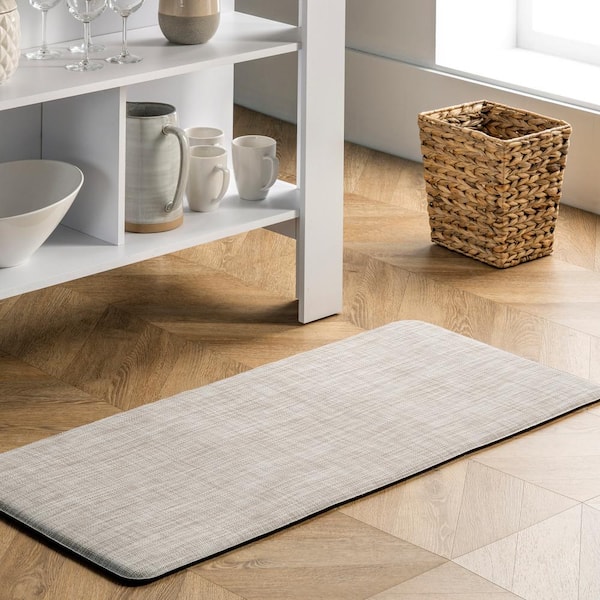
Comfort should never mean compromising aesthetics.


4
Design tips to elevate your space:
- Match cabinet tones: Neutral shades blend seamlessly.
- Add contrast: Bold patterns create focal points.
- Layer textures: Combine sleek floors with woven designs.
- Use runners in narrow layouts: They visually elongate the room.
Think of floor accents as part of your overall kitchen styling—not an afterthought.
Placement Matters: Where to Position Kitchen Mats
Strategic placement maximizes comfort and safety.
In Front of the Sink
This is where most standing time happens.
Near the Stove
Cooking often requires extended prep time.
Along Kitchen Islands
Perfect for open layouts and entertainers.
In Front of the Dishwasher
Reduces strain while loading and unloading.
Avoid placing mats where they block cabinet doors or create trip hazards. Ensure edges lay flat and secure.
Cleaning and Maintenance Tips
Proper care extends lifespan and maintains hygiene.
- Vacuum regularly to remove crumbs.
- Wipe spills immediately.
- Machine wash fabric mats as recommended.
- Avoid harsh chemicals on foam-based designs.
- Rotate periodically to prevent uneven wear.
A little maintenance keeps your flooring fresh and functional.
Common Mistakes to Avoid
Even experienced homeowners make these errors:
- Choosing style over comfort
- Ignoring slip resistance
- Buying the wrong size
- Overlooking thickness
- Skipping moisture resistance
The right balance of function and design ensures long-term satisfaction.
Eco-Friendly and Sustainable Options
Sustainability is becoming increasingly important in home design. Some manufacturers now offer:
- Recycled rubber bases
- Natural fiber surfaces
- Low-VOC materials
- Biodegradable packaging
Choosing environmentally conscious materials supports both your home and the planet.
FAQs
Frequently Asked Questions
Are kitchen mats really necessary?
If you stand for long periods while cooking or washing dishes, they significantly reduce fatigue and joint strain.
What thickness is best?
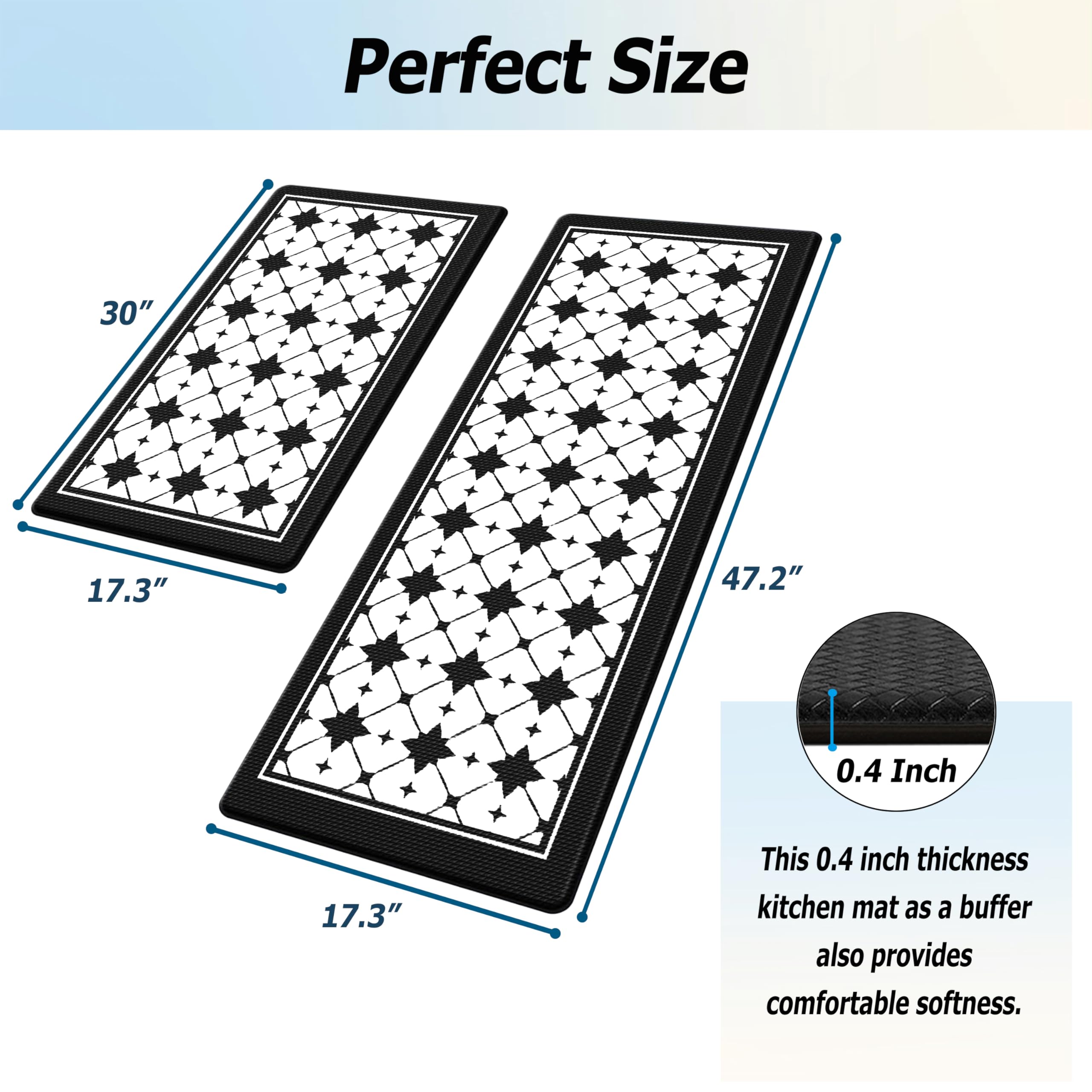
For ergonomic support, look for options around ½ to ¾ inch thick.
Can kitchen mats damage hardwood floors?
Not if they have non-staining, non-slip backing designed for hardwood compatibility.
How often should I replace them?
High-quality designs can last several years with proper care.
Are they safe for homes with pets?
Yes—just ensure edges lie flat to prevent tripping.
Can I machine wash all mats?
Only fabric-based styles are usually machine washable. Foam versions should be wiped clean.
Do kitchen mats help prevent slipping?
Yes, especially those with textured or rubberized backing.
What size should I choose?
Measure your primary standing areas—sink, stove, or island—to ensure proper coverage.
Conclusion
Comfort in the kitchen isn’t a luxury—it’s a necessity. The right foundation beneath your feet can transform daily cooking from a tiring chore into a more enjoyable experience. Beyond reducing fatigue, thoughtfully chosen kitchen mats protect your flooring, enhance safety, and add character to your space.
Small design decisions often have the biggest impact. When comfort, style, and practicality align, your kitchen becomes not just a place to cook—but a place to truly feel at home.