
Introduction
A beautifully styled table can completely transform a room—and often, all it takes is a thoughtfully chosen table runner. This simple strip of fabric has the power to elevate everyday meals, formal dinners, and seasonal gatherings without overwhelming your space.
Whether you’re refreshing your dining room or planning a celebration, understanding how to use a table runner effectively can make your décor feel intentional and refined. It’s not just about color or pattern; it’s about proportion, texture, and how everything works together.
In this guide, you’ll learn how to select the right material, size, and style for different occasions. We’ll explore practical design advice, common mistakes to avoid, and creative ideas that help your table look polished yet welcoming.
What Is a Table Runner?
A table runner is a long, narrow piece of fabric designed to run lengthwise along the center of a table. Unlike a full tablecloth, it doesn’t cover the entire surface. Instead, it adds visual interest while allowing the table’s material—wood, glass, or marble—to remain visible.
Traditionally used in formal dining settings, it has evolved into a versatile décor element found in modern homes, rustic kitchens, and event spaces alike.
Key Characteristics
- Typically 12–18 inches wide
- Long enough to hang 6–12 inches over each end
- Made from materials like cotton, linen, silk, burlap, velvet, or polyester
- Used alone or layered over a tablecloth
This balance between functionality and aesthetics is what makes it such a staple in home styling.
How to Choose the Right Table Runner for Your Space
Selecting the perfect piece involves more than picking a pretty pattern. You need to consider size, fabric, color, and the purpose of your table.
1. Measuring for Proper Fit
Measure the length and width of your table first. The standard guideline is:
- Add 12–24 inches to your table length for a graceful overhang.
- Ensure the width allows enough space for plates and centerpieces without crowding.
For example, a 72-inch dining table pairs well with a 90-inch runner to achieve balanced proportions.
2. Selecting the Right Material
Different materials create different moods:
- Linen: Relaxed and breathable; ideal for everyday use.
- Cotton: Durable and easy to clean.
- Velvet: Luxurious and dramatic for winter or formal dinners.
- Burlap: Rustic charm for farmhouse or outdoor events.
- Silk or satin: Elegant and event-focused.
Texture matters just as much as color. A textured fabric can add depth to minimalist spaces, while smooth finishes complement ornate décor.
3. Choosing Colors and Patterns
Your choice depends on:
- Existing room color palette
- Season or holiday theme
- Formality level of the occasion
Neutral shades (cream, gray, beige) offer versatility. Bold patterns create focal points. Stripes elongate tables visually, while florals add softness.
Styling a Table Runner for Everyday Dining
Daily meals deserve thoughtful presentation too. Styling doesn’t have to be complicated.
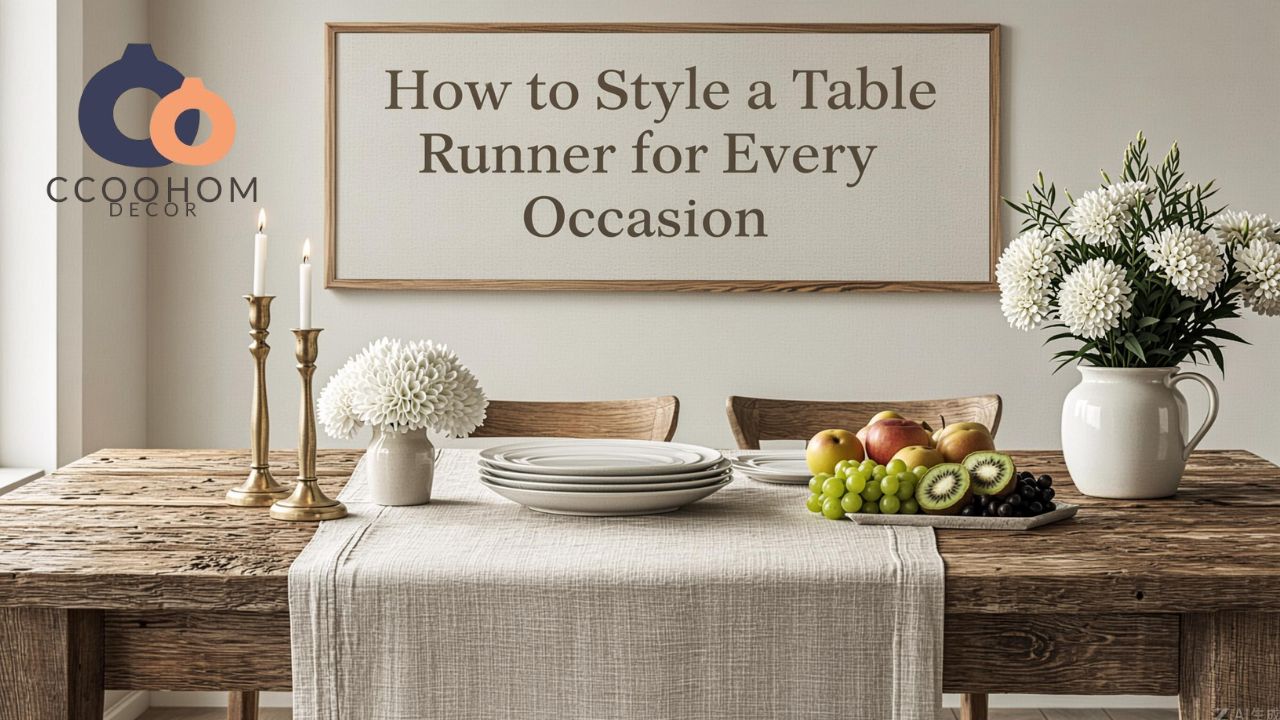
Start with a clean table surface. Lay the runner centered lengthwise. Keep décor simple:
- A small vase with fresh flowers
- Two to three candles
- A decorative bowl
Avoid overcrowding. The goal is to create harmony between function and beauty.
After placing your centerpiece, check spacing. There should be enough room for plates, glasses, and serving dishes without overlapping décor elements.
Simple layering techniques can also work beautifully. For instance, placing a contrasting runner over a neutral tablecloth creates dimension without feeling busy.
Using a Table Runner for Special Occasions
When entertaining guests or celebrating holidays, décor becomes part of the experience.
Weddings and Formal Dinners
For weddings or anniversary dinners:
- Choose satin, lace, or sequined fabrics.
- Match with coordinated napkins.
- Add elegant centerpieces like floral arrangements or crystal candle holders.
Symmetry enhances formality. Keep decorative elements evenly spaced for a polished look.
Seasonal Celebrations
Each season offers unique inspiration:
- Spring: Pastels, florals, light linens.
- Summer: Bright hues, tropical prints.
- Autumn: Earth tones, textured fabrics.
- Winter: Deep reds, greens, velvet or metallic accents.
An infographic explaining seasonal color palettes could help visualize these ideas. Imagine a simple chart showing spring pastels, summer brights, autumn neutrals, and winter jewel tones aligned with suggested fabrics.
Creative Ways to Style a Table Runner
Beyond traditional placement, there are innovative approaches worth exploring.
1. Crosswise Placement
Instead of running lengthwise, place shorter runners horizontally across the table for individual place settings. This works beautifully for rectangular or banquet tables.
2. Layered Look
Layer different textures:
- Lace over burlap
- Velvet over cotton
- Patterned fabric over solid base
This creates depth and visual interest.
3. Outdoor and Patio Tables
Outdoor tables benefit from durable, weather-resistant materials. Opt for washable fabrics and secure the ends if wind is a concern.
Caring for Your Table Runner
Proper maintenance ensures longevity.
Cleaning Guidelines
Always check care labels, but general tips include:
- Machine wash cotton and linen in cold water.
- Hand wash delicate fabrics like silk.
- Spot clean decorative embellishments.
Ironing or steaming keeps it looking crisp. Store flat or rolled to prevent creases.
Storage Tips
- Avoid damp areas to prevent mildew.
- Use breathable fabric storage bags.
- Keep away from direct sunlight to prevent fading.
Common Mistakes to Avoid
Even small décor details can impact the overall look.
- Choosing incorrect length (too short looks awkward).
- Overcrowding the table with large centerpieces.
- Ignoring color harmony with room décor.
- Using overly delicate fabrics for everyday use.
Being mindful of proportion and purpose helps you avoid these pitfalls.
Table Runner in Different Interior Styles
Interior design themes influence your selection.
Modern Minimalist
Stick to neutral tones and clean lines. Keep décor sparse.
Farmhouse
Natural fibers, plaid patterns, and rustic textures work best.
Traditional
Opt for classic motifs, embroidered details, and rich fabrics.
Bohemian
Experiment with vibrant colors, tassels, and layered textures.
Matching décor style ensures cohesion throughout the room.
FAQ
Frequently Asked Questions
How long should a table runner be?
It should hang 6–12 inches over each end of the table for a balanced appearance.
Can I use a table runner without a tablecloth?
Yes, it often looks more modern and allows the table’s natural surface to show.
Should the runner match my napkins?
It doesn’t have to match exactly, but coordinating colors creates a cohesive look.
Can round tables use runners?
Yes. You can place it across the center or use multiple smaller pieces for symmetry.
How often should I wash it?
Wash based on usage. Everyday runners may need weekly cleaning; decorative ones less often.
What material is best for formal dinners?
Velvet, satin, or lace adds elegance and sophistication.
Can I layer two runners?
Absolutely. Layering adds depth and visual interest when done thoughtfully.
Is it suitable for outdoor tables?
Yes, but choose durable, washable fabrics designed for outdoor use.
Conclusion
A thoughtfully chosen table runner does more than decorate—it shapes the mood of your dining space. From casual family dinners to elegant celebrations, this versatile accent adds personality and warmth without overwhelming your table.
By understanding proportion, fabric choices, and styling techniques, you can transform any dining setup into something memorable. Whether your style is minimalist, rustic, or classic, the right runner helps tie everything together beautifully.