Introduction
There are moments when landscape design stops being about plants and pathways—and starts feeling like a living idea. That’s exactly where kdarchitects landscape ideas from morph sit: at the intersection of imagination, architecture, and nature. These concepts don’t just decorate outdoor spaces; they reshape how we emotionally experience them.
In the first few seconds of encountering kdarchitects landscape ideas from morph, you sense movement, flow, and intent. Nothing feels random. Every curve, elevation, and green pocket seems to evolve naturally, as if the land itself decided how it wanted to grow. That feeling is rare—and powerful.
Why does this matter? Because modern homeowners, developers, and designers are tired of copy-paste gardens. They want landscapes that feel alive, adaptive, and meaningful. Morph-inspired thinking answers that need by blending digital design intelligence with human-centered outdoor living.
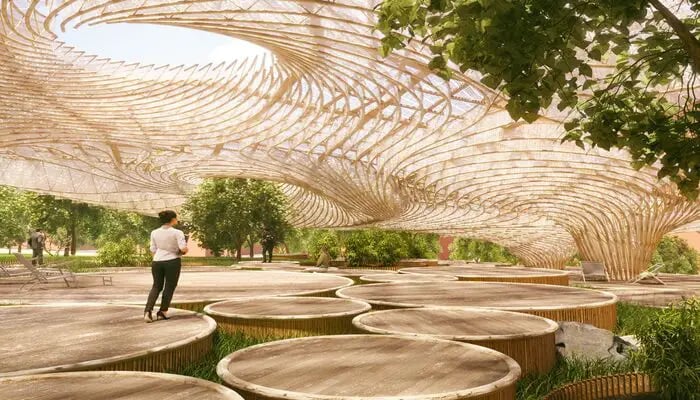
Table of Contents
Understanding kdarchitects landscape ideas from morph
The design philosophy behind morph-based landscapes
How morph thinking transforms outdoor spaces
Core elements used in morph-inspired landscape design
Sustainability and environmental intelligence
Residential applications of morph landscapes
Commercial and public space adaptations
Technology, tools, and digital workflows
Common mistakes to avoid when applying morph concepts
Personal background and creative journey behind the philosophy
FAQs
Conclusion
Understanding kdarchitects landscape ideas from morph

At its core, kdarchitects landscape ideas from morph refer to a design approach where landscapes evolve through transformation rather than fixed patterns. “Morph” implies gradual change—forms that stretch, bend, merge, or dissolve into one another.
Instead of straight borders and rigid symmetry, morph landscapes emphasize continuity. Hardscape melts into softscape. Seating becomes terrain. Pathways behave like flowing lines rather than strict routes. This approach reflects how nature actually works—nothing stops abruptly.
What makes this philosophy stand out is its architectural discipline. These aren’t wild or chaotic gardens. They’re highly controlled, deeply intentional, and often digitally modeled before they ever reach soil. That blend of control and freedom is what defines kdarchitects landscape ideas from morph as both artistic and practical.
The design philosophy behind morph-based landscapes
Nature as a system, not decoration
Traditional landscaping often treats nature as ornamentation. Morph-based design flips that idea. Here, the landscape is a system—one that manages water, temperature, movement, and emotion simultaneously.
Instead of asking, “Where should the trees go?” designers ask, “How should this space behave?” Should it cool the air? Guide people gently? Create moments of pause? Morph landscapes answer those questions through form.
Architecture and landscape as one language
Another defining trait is the disappearance of boundaries between building and land. Walls extend into berms. Rooflines echo ground contours. In many kdarchitects landscape ideas from morph, it’s hard to tell where architecture ends and landscape begins—and that’s intentional.
This continuity creates visual calm. The eye doesn’t jump; it flows. And psychologically, that flow reduces stress, making these landscapes feel instinctively comfortable.
How morph thinking transforms outdoor spaces
From static layouts to dynamic experiences
Most landscapes are designed to be viewed. Morph landscapes are designed to be experienced. As you move, the space changes. A curve hides and reveals. Elevation shifts perspective. Light interacts differently at each step.
This dynamic quality is why morph-inspired outdoor spaces feel larger than they are. Even small plots can feel expansive when movement is thoughtfully choreographed.
Emotional impact on users
In reality, people remember how a place made them feel—not how it was planted. Morph landscapes excel here. Soft transitions create safety. Organic geometry feels familiar, even if it’s visually bold.
That emotional resonance is a major reason developers and high-end homeowners are increasingly drawn to kdarchitects landscape ideas from morph for flagship projects.
Core elements used in morph-inspired landscape design
Fluid geometry
Curves dominate. But not decorative curves—functional ones. Paths widen where people slow down. Seating arcs follow social clusters. Water features ripple outward in patterns that mirror natural erosion.
Layered topography
Flat landscapes feel predictable. Morph design introduces subtle elevation changes that guide movement and define zones without walls. A 300–600 mm shift in level can separate private and public space effortlessly.
Integrated materials
Concrete, stone, timber, and greenery are blended rather than separated. Materials transition gradually—rough to smooth, hard to soft—mirroring the morph concept at a tactile level.
Planting as structure
Plants aren’t fillers here. They’re structural elements. Grasses define edges. Trees anchor visual weight. Groundcover stitches everything together. The planting plan is as intentional as the architecture itself.
Sustainability and environmental intelligence
One of the strongest arguments for kdarchitects landscape ideas from morph is sustainability. These landscapes aren’t just beautiful—they’re efficient.
Morph forms naturally support water management. Swales, depressions, and curved surfaces guide rainwater toward collection points, reducing runoff. Studies show that well-designed landscape grading can cut surface runoff by up to 30%.
Plant selection also leans heavily toward native and adaptive species. That reduces irrigation needs, improves soil health, and supports local biodiversity. Over time, morph landscapes often require less maintenance than traditional designs—despite looking more complex.
Residential applications of morph landscapes
Private gardens that feel expansive
In homes, morph ideas are often used to break the boxy feel of small plots. Curved paths visually lengthen space. Layered planting creates depth. Seating emerges from the ground instead of being placed on it.
Homeowners report that these spaces feel more “retreat-like,” even in dense urban settings. The garden stops being an accessory and becomes a daily experience.
Seamless indoor–outdoor living
Sliding doors open into landscapes that feel like extensions of the living room. Floor levels align. Materials echo inside finishes. This continuity increases perceived home value and usability—two things buyers consistently prioritize.
Commercial and public space adaptations
Corporate campuses and identity
For offices, kdarchitects landscape ideas from morph help communicate innovation. Fluid outdoor spaces mirror forward-thinking brand values. Employees use them for informal meetings, breaks, and reflection—boosting satisfaction and productivity.
Public spaces and crowd flow
In parks and plazas, morph landscapes subtly guide people without signage. Curves slow foot traffic. Openings encourage gathering. Designers have observed improved circulation efficiency simply by reshaping paths organically.
Technology, tools, and digital workflows
Behind the organic beauty lies serious technology. Parametric design software, 3D modeling, and environmental simulation tools are commonly used to develop morph landscapes.
Designers test sun paths, drainage behavior, and human movement digitally before construction begins. This reduces costly site changes and ensures the final outcome behaves as intended.
However, technology doesn’t replace intuition—it enhances it. The best kdarchitects landscape ideas from morph balance data-driven decisions with human sensitivity.
Common mistakes to avoid when applying morph concepts
• Overusing curves without purpose
• Ignoring maintenance realities
• Forcing morph forms onto unsuitable sites
• Neglecting user comfort in favor of visuals
• Treating planting as an afterthought
Morph design works best when every decision has a reason. Without that discipline, the result can feel messy instead of meaningful.
Personal background and creative journey behind the philosophy
The thinking behind morph-based landscapes didn’t appear overnight. It evolved through years of architectural experimentation, environmental observation, and technological exploration. Early projects often focused on rigid modernism—clean lines, sharp edges, absolute control.
Over time, designers realized that people didn’t connect emotionally with those spaces. They admired them—but didn’t linger. That disconnect sparked a shift toward landscapes that behave more like natural systems.
As digital tools improved, it became possible to design complexity without chaos. Achievements followed: international features, concept-driven residential projects, and public installations that blended art with function.
Financially, studios working with morph-inspired landscape architecture often operate in the premium segment. While exact figures vary, high-end landscape architecture practices typically generate six to seven figures annually, especially when serving commercial and international clients. The real value, however, lies in intellectual property—ideas that can’t be easily copied.
FAQs
h2
What makes kdarchitects landscape ideas from morph different from traditional landscaping?
Traditional landscaping focuses on placement. Morph ideas focus on transformation, flow, and system behavior.
Are morph-inspired landscapes more expensive?
Initial costs can be slightly higher, but long-term maintenance and environmental efficiency often reduce total lifetime cost.
Can small spaces use morph concepts?
Yes. In fact, small spaces benefit the most from visual flow and layered design.
Do morph landscapes require special maintenance?
Not necessarily. When designed correctly, they often require less water and fewer interventions.
Is this style suitable for all climates?
Yes, when adapted using local materials and native planting strategies.
How long does it take to design a morph-based landscape?
Design phases may take longer due to modeling, but construction timelines are usually comparable.
Can morph ideas be combined with minimalism?
Absolutely. Many morph landscapes are minimalist in palette but rich in form.
Conclusion
At a time when outdoor spaces are expected to do more—heal, inspire, perform—kdarchitects landscape ideas from morph offer a compelling path forward. They reject rigid formulas and embrace intelligent transformation.
These landscapes don’t shout for attention. They invite exploration. They grow with time, adapt to use, and quietly improve the lives of those who move through them. If the future of landscape design is about connection—between people, place, and nature—then morph-based thinking isn’t a trend. It’s a direction.